How Human Activity Contributes to Increased Fog Formation
Understanding Fog Formation
Fog is a natural phenomenon that closely resembles a cloud, primarily because it involves the collection of tiny water droplets. However, unlike clouds, fog forms near the ground, often resulting in significantly reduced visibility which can affect transportation and daily activities. The formation of fog is largely dependent on moisture saturation in the air and subsequent condensation into water droplets. Several human activities also contribute to fog formation, which can have broad environmental implications.
Urbanization and Industrial Activities
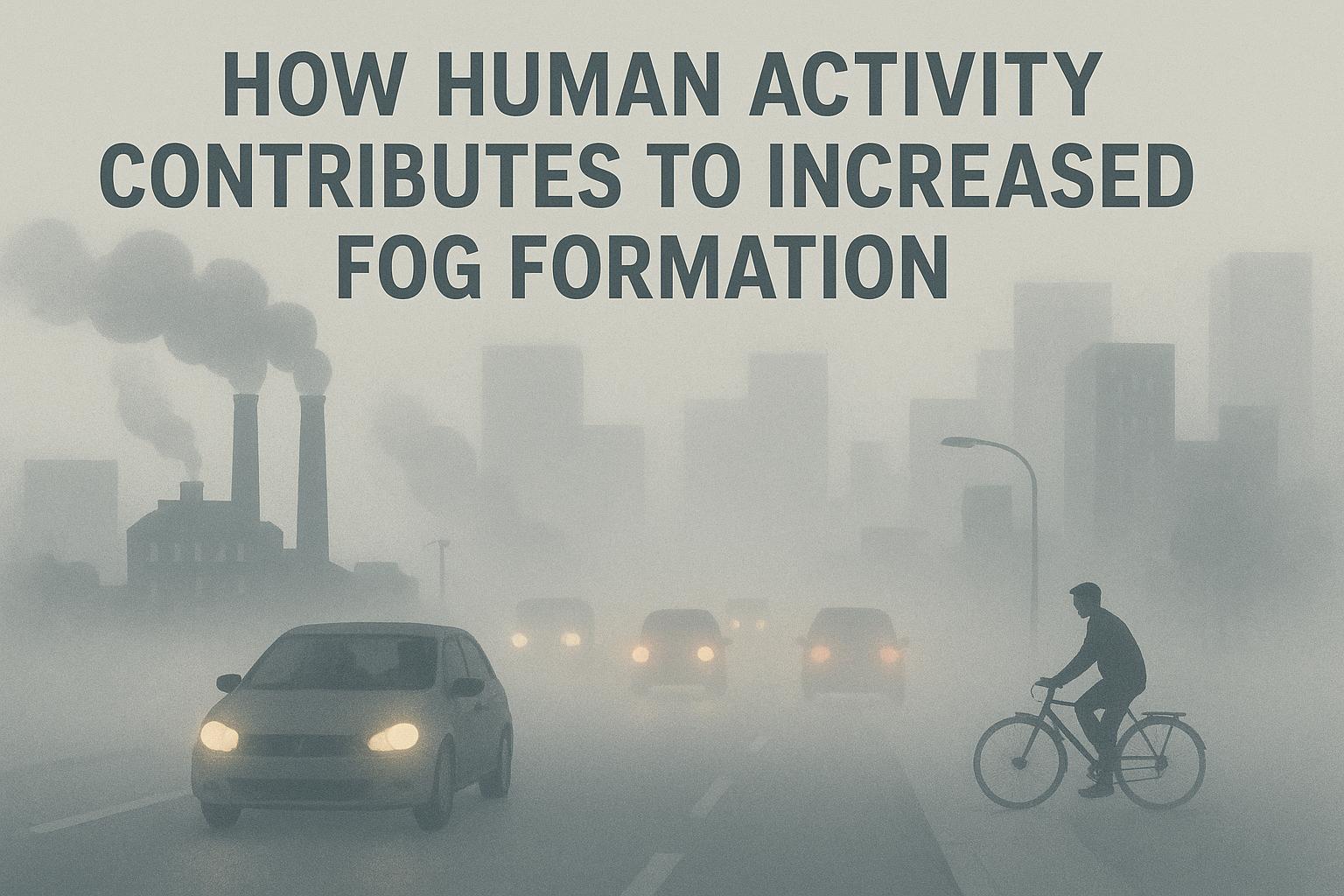
Modern urban landscapes are characterized by high-density infrastructures, bustling activities, and increased emissions. As these urban areas continue to expand, the concentration of pollutants in the atmosphere escalates proportionally. Industrial emissions, in particular, release a substantial amount of particulate matter and pollutants which play a crucial role in enhancing fog formation. These particles act as nuclei for condensation, allowing water droplets to form more readily, which in turn increases the likelihood and density of fog.
Role of Air Pollution
Air pollution is one of the most significant contributors to fog, primarily due to the emissions from vehicles and factories. Pollutants, such as sulfur dioxide and nitrogen oxides, undergo chemical transformations in the atmosphere, often resulting in the formation of secondary particles. These particles are particularly effective in providing surfaces for water vapor to condense upon, thereby facilitating the formation of fog. The interplay between air pollution and fog demonstrates a notable interaction where human activities exacerbate natural weather phenomena.
Impact of Agriculture
Agriculture has long been an integral component of human existence, providing sustenance and economic stability. Nonetheless, certain agricultural practices contribute indirectly to the formation of fog. The widespread use of fertilizers is known to release ammonia into the atmosphere. Ammonia can react with other chemicals found in the air, producing additional particulate matter. This particulate matter, much like pollutants from industrial activities, aids in the development of fog by providing surfaces for condensation.
Water Management and Irrigation
One of the significant agricultural activities impacting fog formation is large-scale irrigation. This process alters the local humidity levels by increasing moisture content in the air. When the air becomes heavily laden with moisture, particularly in areas where intensive irrigation is practiced, it can lead to the formation of ground fog. Agricultural practices, therefore, not only influence food production but also have a noticeable effect on local weather patterns, including fog generation.
Climate Change and Temperature Variations
Climate change remains a pivotal global issue, with far-reaching effects on various environmental and atmospheric processes. Human-induced climate change, primarily through the emission of greenhouse gases, is altering weather patterns and temperature fluctuations. These changes can impact fog formation, as they influence the atmospheric conditions required for condensation. With increased greenhouse gas emissions, the global climate is experiencing shifts in condensation rates, subsequently affecting the incidence and density of fog.
Heat Islands
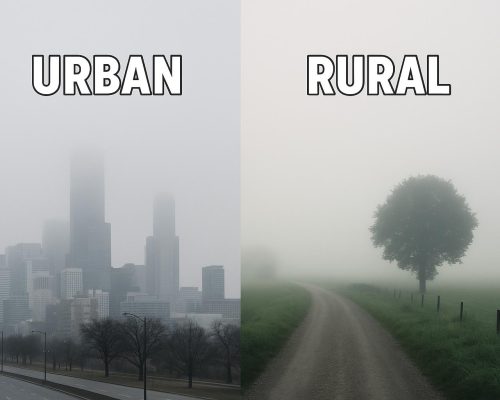
A notable phenomenon associated with urban areas is the development of heat islands. These are areas that become significantly warmer than their rural surroundings due to human construction and activities. The resulting temperature differentials can influence local microclimates, enhancing the potential for fog formation. Buildings and roads, which absorb and subsequently radiate heat, further intensify fog occurrences in such areas. Understanding the relationship between heat islands and fog can aid in developing urban planning strategies to mitigate these effects.
Conclusion
In summary, while fog is a natural atmospheric phenomenon, the intricacies of its formation are heavily influenced by human activities. Urbanization, industrial emissions, agricultural practices, and climate change each contribute substantially to increased fog formation. These activities result in higher concentrations of particulate matter, increased humidity levels, and altered temperature patterns. Understanding these human-induced impacts on fog formation is essential for developing effective strategies to mitigate their effects on the environment and improve visibility. By recognizing the interconnectedness of human activities and natural processes, policy-makers, urban planners, and individuals can work towards a sustainable coexistence with our atmospheric environment.