How Climate Zones Affect Fog Frequency
Introduction to Climate Zones and Fog Frequency
Understanding the dynamic interplay between climate zones and fog frequency provides a valuable lens through which to view regional weather systems and their broader implications. Each climate zone, characterized by its own distinct weather patterns, temperatures, and precipitation levels, exerts a significant influence on the occurrence and types of fog that can develop within it. This exploration delves into how these climate zones relate to fog formation while highlighting key factors that must be considered in this context.
Types of Climate Zones
Tropical Zones
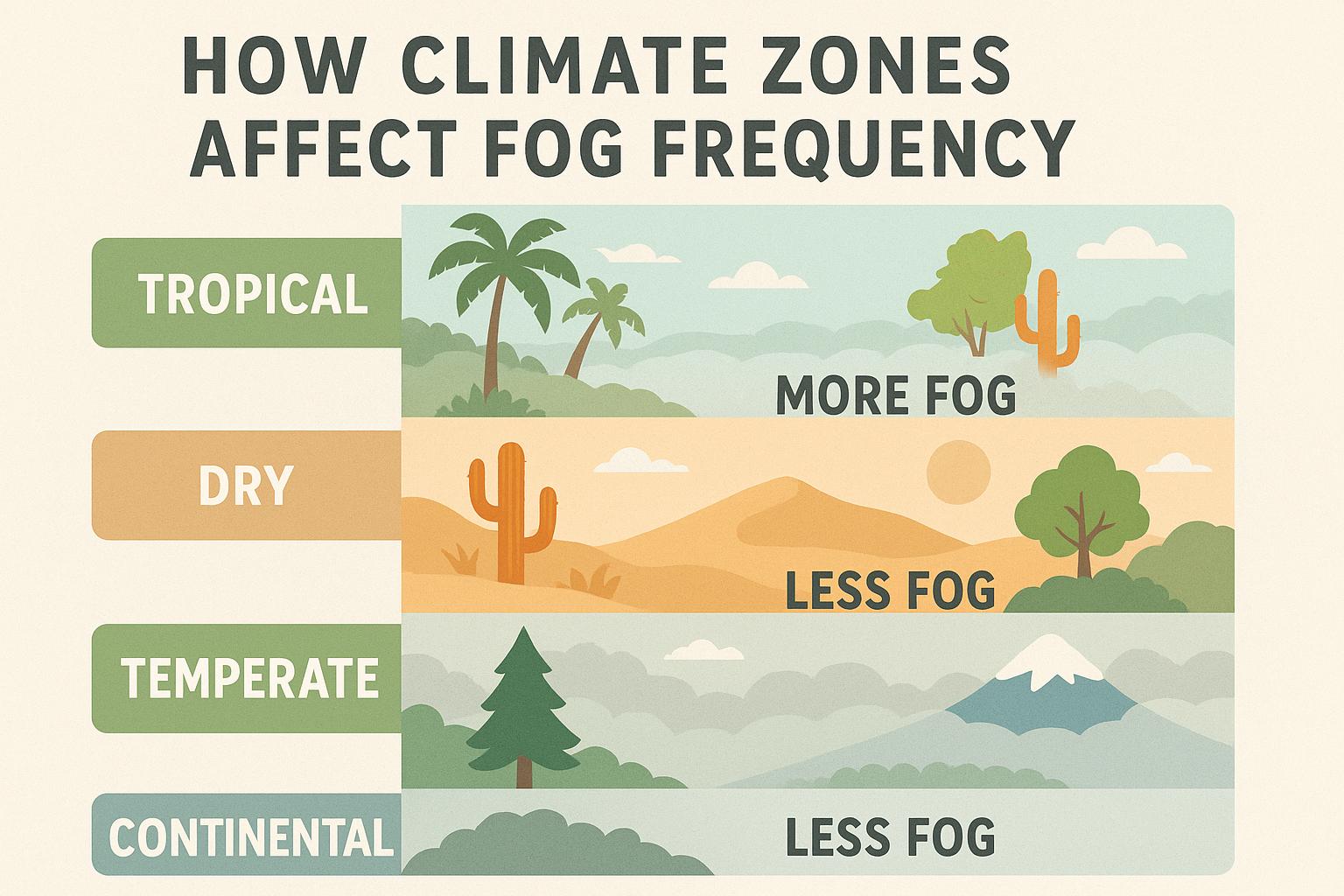
Tropical zones, embracing the equatorial region of the planet, are typified by persistently high temperatures and humidity levels. These conditions can vary in terms of fog frequency, largely contingent on geographical factors. For instance, coastal regions within tropical climates often encounter fog formation, frequently termed sea fog. This occurs when warm, humid air meets cooler oceanic currents, leading to the condensation of moisture. The interaction between these climatic elements demonstrates how tropical climates can foster conditions ripe for specific fog occurrences, despite their generally warm nature.
Arid Zones
Dominated by extreme dryness and scant rainfall, arid zones typically offer conditions unsuitable for regular fog formation. Nevertheless, unique circumstances, particularly in coastal deserts like the Namib or Atacama, give rise to a phenomenon known as “fog deserts.” The combination of cold ocean currents meeting land with minimal moisture can create temperature inversions. Such inversions trap moisture in the air, promoting the occurrence of fog even in vastly dry environments. Thus, while rare, foggy conditions in arid zones illuminate the exceptional interplay between geographic and climatic factors.
Temperate Zones
Temperate zones, recognized for their moderate climates and pronounced seasonal variations, frequently witness fog formation. In regions where water bodies such as lakes or oceans interface with land, fog tends to develop more readily. One of the notable fog types arising in temperate zones is radiation fog. This phenomenon occurs typically during clear nights when the ground loses heat rapidly, causing nearby air moisture to condense into fog. Consequently, temperate climates illustrate how even moderate weather conditions can facilitate frequent fog occurrences.
Continental Zones
Continental zones, encompassing vast stretches of land with limited oceanic influence, experience significant temperature variability. The variability is often more pronounced during transitional seasons such as spring and fall, where the collision and mixing of distinct air masses lead to fog development. In these zones, advection fog is common; it arises when warm, moisture-laden air traverses cooler land surfaces, resulting in moisture condensation. This type of fog occurrence highlights how shifting air masses and geographical influences contribute to fog formation in continental zones.
Polar Zones
Polar zones, characterized by severe cold and extensive periods of light or darkness, demonstrate unique conditions conducive to fog formation, particularly ice fog. Ice fog presents when the cold, moisture-laden air crystallizes into ice particles, hanging suspended in the air and significantly reducing visibility. The presence of ice fog poses notable challenges, particularly concerning transportation and daily activities. As such, polar climates, though harsh, underscore the adaptability of fog to varying climate extremes.
Factors Influencing Fog Frequency
The consistency and frequency of fog are affected by several factors that transcend climate zones:
Geographical Location: Proximity to large bodies of water, such as oceans and seas, or mountain ranges enhances the likelihood of fog formation. These geographical features alter air flows and temperature patterns, making fog more likely in certain locations.
Topography: Valleys, lowlands, and basins serve as natural havens for fog accumulation due to their structure allowing cooler air to settle, enhancing the condensation process.
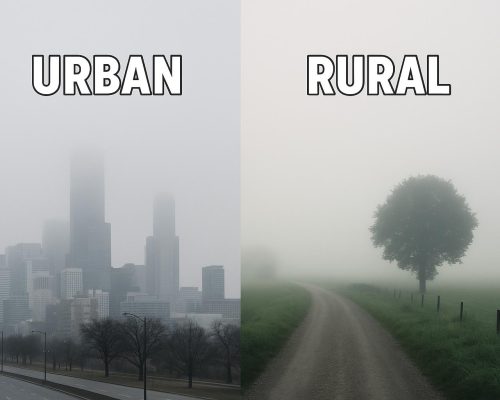
Air Pollution: Urban areas often experience elevated fog levels due to airborne pollutants that act as condensation nuclei, facilitating moisture aggregation into fog. Consequently, human activities and industrial emissions directly influence fog frequency in such environments.
Understanding these underlying factors holds significant importance for predicting fog formation and strategizing preparedness measures to minimize its impact on daily life and activities.
Conclusion
The frequency of fog is interwoven with the unique characteristics of each climate zone. While some regions are prone to regular fog occurrences, others encounter it as an anomaly. Comprehending these patterns is of paramount importance for effective weather forecasting and understanding potential ramifications on human endeavors. To delve deeper into the intricate relationships between climate zones and fog, exploring dedicated meteorological resources such as the National Weather Service or academic research conducted by environmental studies institutions can provide invaluable insights.