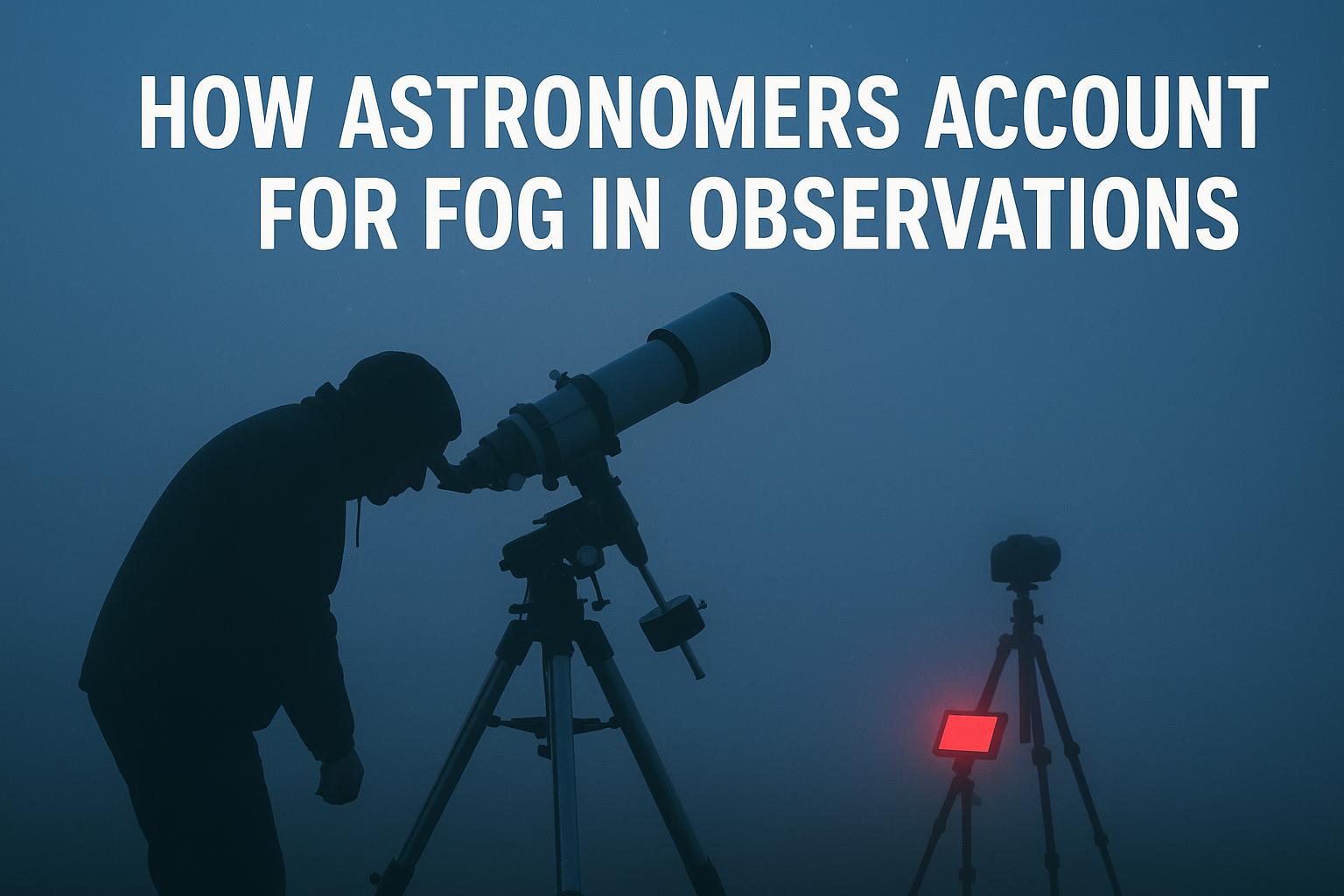
How Astronomers Account for Fog in Observations
Understanding the Impact of Fog on Astronomical Observations
Fog presents a significant challenge for astronomers as they strive to capture clear and precise images of celestial bodies. This atmospheric condition, characterized by low-lying clouds composed of water droplets, can obscure the view of the night sky. While astronomers cannot eliminate fog, they have developed various strategies to mitigate its impact.
Locational Considerations
One of the primary considerations in addressing the problem of fog in astronomical observations is the careful selection of observatory sites. The location of an observatory is crucial in ensuring that it encounters minimal interference from fog and other weather-related disturbances. Traditionally, altitudes and climates are the two main factors considered when selecting these sites.
Observatories are often situated in high-altitude areas where the skies are typically clearer and less susceptible to fog formation. This is because, at higher altitudes, the air is thinner, reducing the likelihood of cloud and fog development. As an example, observatories located on mountain tops, such as those in the Andes or the Hawaiian Islands, enjoy less atmospheric disruption. The thin air and cold temperatures at such altitudes result in minimal moisture content, thus dampening the formation of fog and promoting clearer skies for observation.
Using Advanced Technology
Technology is an essential ally for astronomers in combating the effects of fog. Modern telescopes come equipped with advanced instruments designed to minimize atmospheric distortion, allowing for the capture of more precise images of celestial entities. One of the key technological developments in this regard is adaptive optics.
Adaptive optics involves the real-time adjustment of the telescope’s mirrors to offset the effects of atmospheric turbulence, which frequently causes distortions. By dynamically reshaping the mirrors, these systems compensate for the light disturbances caused by fog and other atmospheric conditions, hence providing astronomers with sharper and more accurate observations. Such technology is indispensable, especially when observing distant galaxies, stars, and other celestial bodies.
Weather Forecasting and Scheduling
Another vital component in managing fog impact on astronomical observations is accurate weather forecasting. It is a proactive measure that allows astronomers to plan and schedule their observations in alignment with the expected weather conditions. By analyzing comprehensive meteorological data, observatories can anticipate fog formation.
This predictive capacity allows astronomers to schedule their observations for times when clearer skies are expected, thereby enhancing the probability of obtaining reliable and high-quality data. This scheduling strategy maximizes the operational time of telescopes and ensures that valuable astronomical data is not compromised due to unfavorable weather conditions.
Image Processing Techniques
On occasions when observations are conducted under suboptimal weather situations such as when fog persists, astronomers can lean on image processing techniques to enhance the quality of the collected data. With the help of specialized software, it is possible to reduce the noise within images and adjust for distortions introduced by atmospheric conditions like fog.
These image processing techniques are instrumental in extracting valuable data from images that might initially appear flawed or compromised. Through tasks such as image stacking, noise reduction, and contrast enhancement, astronomers can recover a significant amount of detail, thus enhancing the observational outcomes even when conditions are not ideal.
Remote Observatories and Data Sharing
Collaborative efforts among global observatories provide another layer of response to the challenges posed by fog. By sharing data and findings from facilities located in both local and remote sites with varying weather conditions, a robust network is established that ensures continuous observation.
Furthermore, the operation of remote telescopes strategically positioned in clear-sky regions around the globe enhances the reliability and quality of astronomical data collection. This collaborative framework allows astronomers to draw from a diverse pool of observations, enabling a comprehensive approach to cosmic exploration irrespective of local atmospheric challenges.
Conclusion
Fog indeed poses a significant challenge for astronomical observations. However, through a combination of strategic planning, technological advancements, and collaborative efforts, astronomers are not deterred in their pursuit of exploring the universe. The strategic placement of observatories, utilization of cutting-edge technology like adaptive optics, reliance on accurate weather forecasts, and the application of advanced image processing techniques are all pivotal in overcoming the limitations posed by fog.
Collaborations among global observatories further bolster these efforts, ensuring that continuous observation and data collection proceed without hindrance. Through these measures, even when nature introduces obstacles, the pursuit of scientific inquiry remains steadfast and productive.