
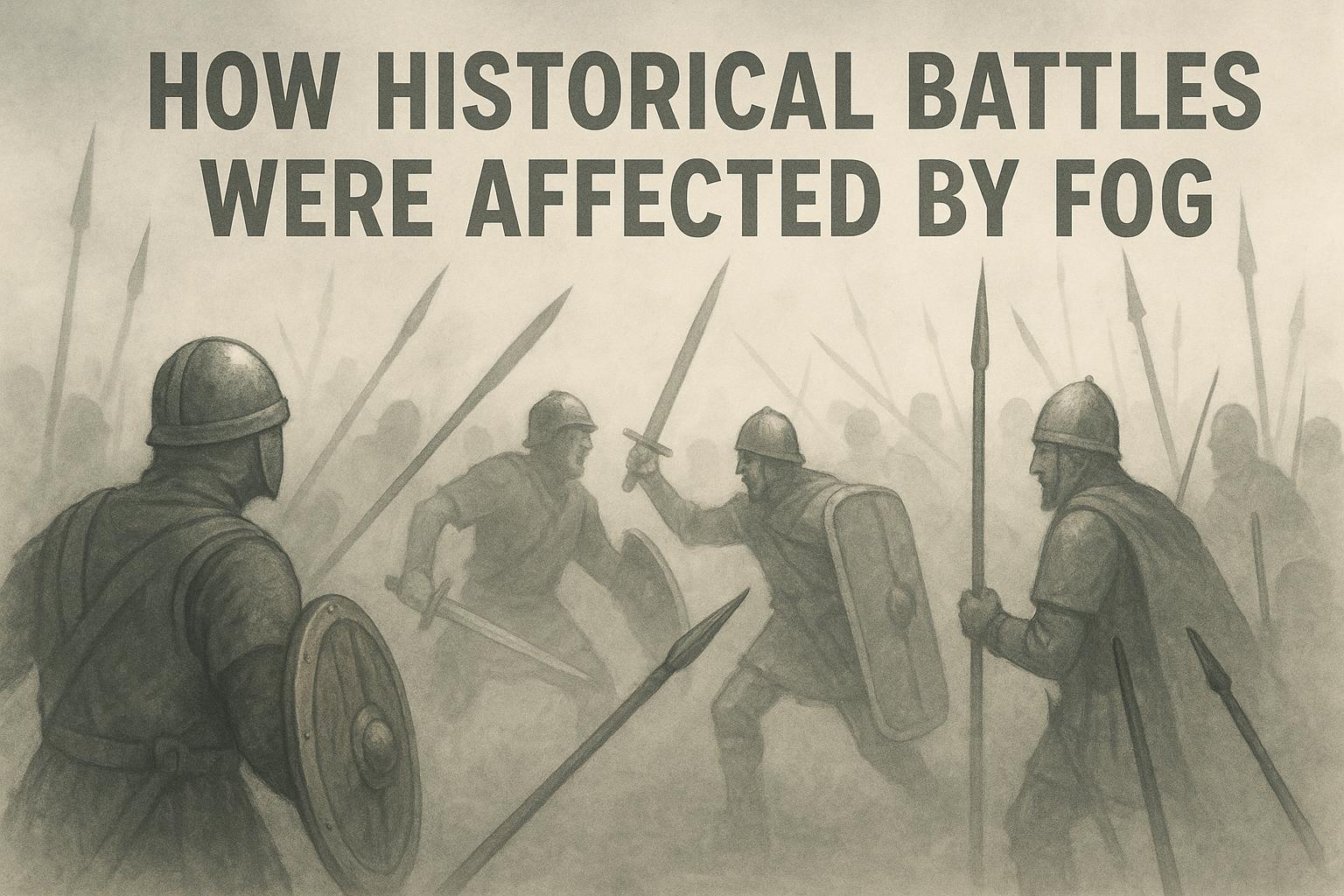
How Historical Battles Were Affected by Fog
The Role of Fog in Historical Battles
Fog has been a crucial element on the battlefield throughout history. Its dense and disorienting nature has often swayed battles, providing opportunities for surprise attacks and sometimes inadvertently altering the outcomes. Below are some notable instances where fog played a pivotal role.
The Battle of Agincourt (1415)
In the early hours of October 25, 1415, the clash between English and French forces unfolded amidst a thick morning fog at Agincourt. This obscuring fog served as an unexpected ally for the English army, providing them with a veil of invisibility that proved strategically invaluable. As both armies prepared for engagement, the limited visibility allowed English forces to move with stealth and precision, advancing silently toward the unsuspecting French lines.
The English troops, led by King Henry V, skillfully utilized the fog to deploy their longbowmen in advantageous positions. The element of surprise was paramount, as the French army, blinded by the mist, found themselves under a barrage of arrows before they could adequately organize their defenses. This tactical deployment not only underscores the pivotal role of the longbowmen in this encounter but also highlights fog’s transformative impact. The resulting victory was not just a triumph of military strategy but a testament to how natural elements can tilt the balance of power on the battlefield.
The Battle of Barnet (1471)
As part of the Wars of the Roses, the Battle of Barnet, fought on April 14, 1471, offers another compelling instance of fog’s influence in historical warfare. On this fateful day, dense fog enveloped the battlefield, creating a shroud of confusion among the combatants. The fog’s presence significantly altered the dynamics of the battle, impacting visibility to an extent that allies mistakenly perceived each other as foes.
In the chaos, the Earl of Warwick’s army inadvertently attacked its own allies. This critical error, borne from limited visibility, led to internal disorder and compromised the cohesion of Warwick’s forces. In contrast, Edward IV’s Yorkist forces capitalized on the disarray, securing a decisive victory that shifted the tides of this dynastic conflict. The Battle of Barnet serves as a lasting illustration of the double-edged nature of fog, offering opportunities for both strategic advantage and fatal mistakes.
The Battle of Chancellorsville (1863)
Turning to the American Civil War, the Battle of Chancellorsville exemplifies how commanders have leveraged environmental conditions to their advantage. On May 2, 1863, Confederate General Robert E. Lee made innovative use of the dense fog to launch one of the most remarkable tactical maneuvers of the war. Under the cover of fog, Lee’s forces executed a surprise flanking attack against the Union Army, commanded by Major General Joseph Hooker.
Despite facing a larger and better-equipped enemy, the Confederates’ strategic deployment of forces, coupled with the cloak of fog, afforded them a significant advantage. The surprise flanking maneuver caught the Union troops off guard, leading to a Confederate victory that is often regarded as Robert E. Lee’s greatest triumph. This battle underscores the profound impact that environmental conditions, such as fog, can have when skillfully integrated into military tactics.
The Battle of Passchendaele (1917)
The Battle of Passchendaele, also known as the Third Battle of Ypres, occurred during World War I, offering a different perspective on the impact of fog on military operations. While fought under diverse conditions, including relentless rain and pervasive mud, fog further complicated an already grueling campaign. Troops on both sides faced the perils of fighting under low visibility, marked by treacherous movements and ineffective communication.
Although fog in this instance was not the primary strategic tool, its combination with adverse weather conditions exacerbated the challenges faced by the combatants. The result was a protracted and brutal struggle with high casualties on both sides, emphasizing how weather can compound dilemmas on the battlefield. Passchendaele stands as a sobering reminder of the inherent risks associated with combat under adverse meteorological conditions.
Conclusion
Throughout history, fog has been a double-edged sword on the battlefield. It has offered strategic advantages yet posed enormous risks due to the inherent confusion it brings. These historical instances demonstrate fog’s unpredictable influence and underscore the significance of weather in military strategy. The ability to adapt to and utilize such environmental factors has, in many cases, determined the outcome of battles and, by extension, historical trajectories.
Understanding the role of fog in these pivotal moments offers deeper insights into military history, illustrating how nature often intertwines with human endeavors. As militaries continue to evolve and technology progresses, the lessons from these historical encounters remain valuable. They remind us of the timeless interplay between the environment and military operations and the enduring importance of adapting to the natural world in the quest for strategic advantage.
For further reading, you may find detailed analyses in military history publications or specialized academic sources.