How Fog Can Disrupt Wireless Communication Signals
Introduction to Fog and Wireless Communication
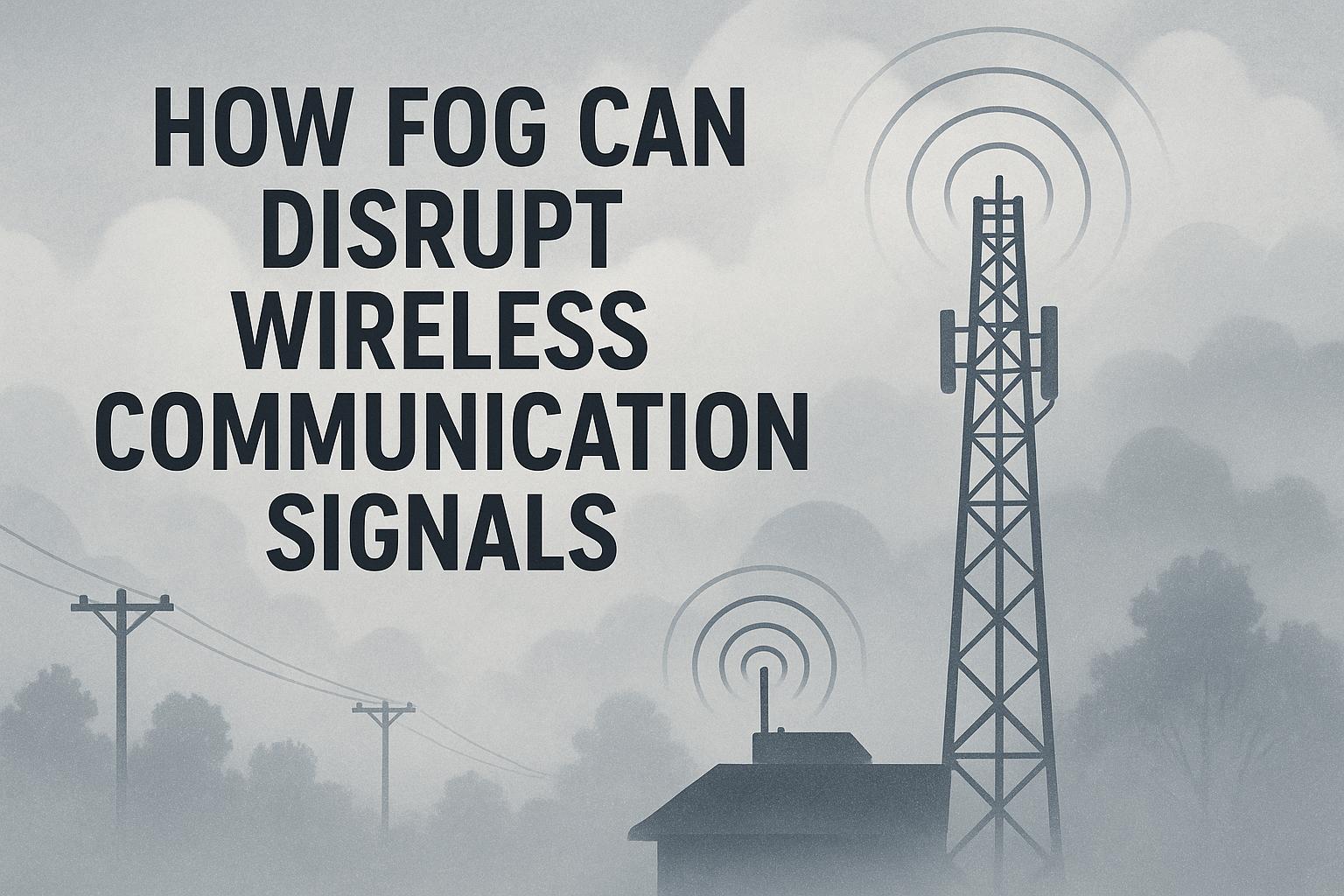
Wireless communication, an essential facet of contemporary technology, facilitates rapid data transmission globally. However, this transmission can be significantly affected by various environmental factors, one of the most notable being fog. This meteorological phenomenon can disrupt wireless signals in multiple ways, necessitating a comprehensive understanding of its effects and the development of strategic measures to counteract these disruptions.
The Nature of Fog
Fog consists of a multitude of minuscule water droplets suspended near the earth’s surface, causing a substantial reduction in visibility. Typically, the size of these droplets ranges from 10 to 15 micrometers. Fog formation occurs when the atmospheric temperature reaches its dew point, leading to the condensation of water vapor into these tiny droplets. This phenomenon is most prevalent in coastal areas, valleys, and regions subject to rapid temperature changes, highlighting its variable nature across different environments.
Effects on Wireless Signals
The ability of fog to impact wireless communication is influenced by a variety of factors, including the frequency of the signal, the inherent strength of the signal, and the density of the fog itself. Understanding these effects is crucial in devising effective measures to mitigate interference. Below are key aspects detailing how these factors interplay:
Absorption and Scattering
Wireless signals, particularly those at higher frequencies, encounter absorption when traversing fog. Absorption involves the water droplets assimilating the signal’s energy, consequently diminishing the signal’s power over its path. Scattering occurs when the signal impacts these droplets and is consequently redirected in numerous directions, resulting in diminished signal strength and subsequently affecting the rates of data transmission.
Affect on Different Frequencies
The extent to which fog affects wireless communication varies depending on the signal’s frequency. High-frequency signals, such as those in millimeter-wave communications (above 30 GHz), are particularly vulnerable to fog-induced disruptions. The propensity for higher frequencies to undergo absorption and scattering by water droplets accounts for this increased susceptibility. Conversely, low-frequency signals—such as those employed in radio communications—benefit from longer wavelengths that tend to navigate through fog with minimal disruption.
Signal Attenuation
Attenuation describes the diminishing strength of a signal as it transverses a medium, like fog. The presence of fog exacerbates attenuation due to increased absorption and scattering, often necessitating elevated power levels or supplementary relay stations to preserve effective communication. This can result in higher operational expenses and increased complexity in sustaining reliable communication networks.
Mitigation Strategies
The challenges posed by fog require strategic mitigation approaches within wireless communication systems:
One effective strategy is choosing frequency bands that exhibit lower susceptibility to fog interference. Employing low-frequency bands for mission-critical communication ensures less disruption amid foggy conditions. Additionally, implementing advanced modulation schemes and error correction algorithms helps maintain stability and connectivity despite signal degradation. Deploying strategically located relay stations and repeaters can also enhance coverage in fog-prone regions, thus offsetting potential signal losses.
Conclusion
Although fog can present substantial hurdles to wireless communication by affecting signal strength and lucidity, a comprehensive understanding of these disruptions can guide the creation of effective countermeasures. By leveraging technology and meticulous planning, the challenges posed by fog can be ameliorated, ensuring dependable communication even under challenging environmental conditions. Further exploration of resources provided by telecommunications authorities such as Ofcom or IEEE can offer detailed insights into standards and best practices for managing fog-related communication issues.