The Relationship Between Fog and Frost Formation
The Dynamics of Fog and Frost Formation
Understanding the interaction between fog and frost formation involves delving into atmospheric conditions and how they orchestrate these natural phenomena. Both fog and frost are influenced by humidity, temperature, and dew point, yet they manifest differently due to distinct processes in the environment.
What is Fog?
Fog is a cloud that forms at the ground level. It occurs when the air near the surface becomes saturated, often either through the cooling of the air to its dew point or by adding moisture to the air until it reaches saturation. The visibility in foggy conditions is usually reduced to less than a kilometer. Several types of fog exist, including radiation fog, advection fog, and freezing fog, with each type developing under specific meteorological conditions.
The comprehensive understanding of fog requires an analysis of how various factors interact to influence its formation and characteristics.
Mechanism of Fog Formation
Fog develops primarily due to the combination of moisture and temperature. When warm, moist air cools down as it comes in contact with a cooler surface or travels over cold bodies of water, the moisture in the air condenses into tiny water droplets, forming fog. The cooling increases the relative humidity of the air until saturation occurs. This seems simple enough, yet the interaction between moisture, air, and surface temperature is more complex.
Various elements in the atmosphere, including pollutants, can affect the ease with which fog forms. The presence of particulate matter serves as nuclei which aids in the condensation of water vapor into droplets. Over urban areas, this can lead to denser fog formation as a result of higher levels of pollution. In rural or clean air environments, such nuclei are less prevalent, influencing how and when fog manifests.
Understanding Frost
Frost, conversely, forms as ice crystals that develop on surfaces when the air temperature falls below the freezing point of water and moisture in the air changes directly from vapor to solid. The frost process is dependent on the dew point being at or below freezing and typically occurs on clear, calm nights. This process is termed deposition, where water vapor transforms directly into ice without going through the liquid phase.
Conditions Favoring Frost Formation
The formation of frost requires several conditions: clear skies, calm winds, and temperatures falling below 0°C (32°F). These factors allow heat to escape into the atmosphere, cooling the ground and causing the surface temperature to drop below the dew point. The absence of wind is crucial as it enables the ground to cool rapidly without warm air mixing.
Surface characteristics also can play a significant role in how frost forms. For instance, different surfaces have varying thermal properties that influence how quickly they lose heat. Metal surfaces cool faster than soil, which is why frost often appears more prominently on car roofs and fences than on grassy fields.
The Interplay Between Fog and Frost
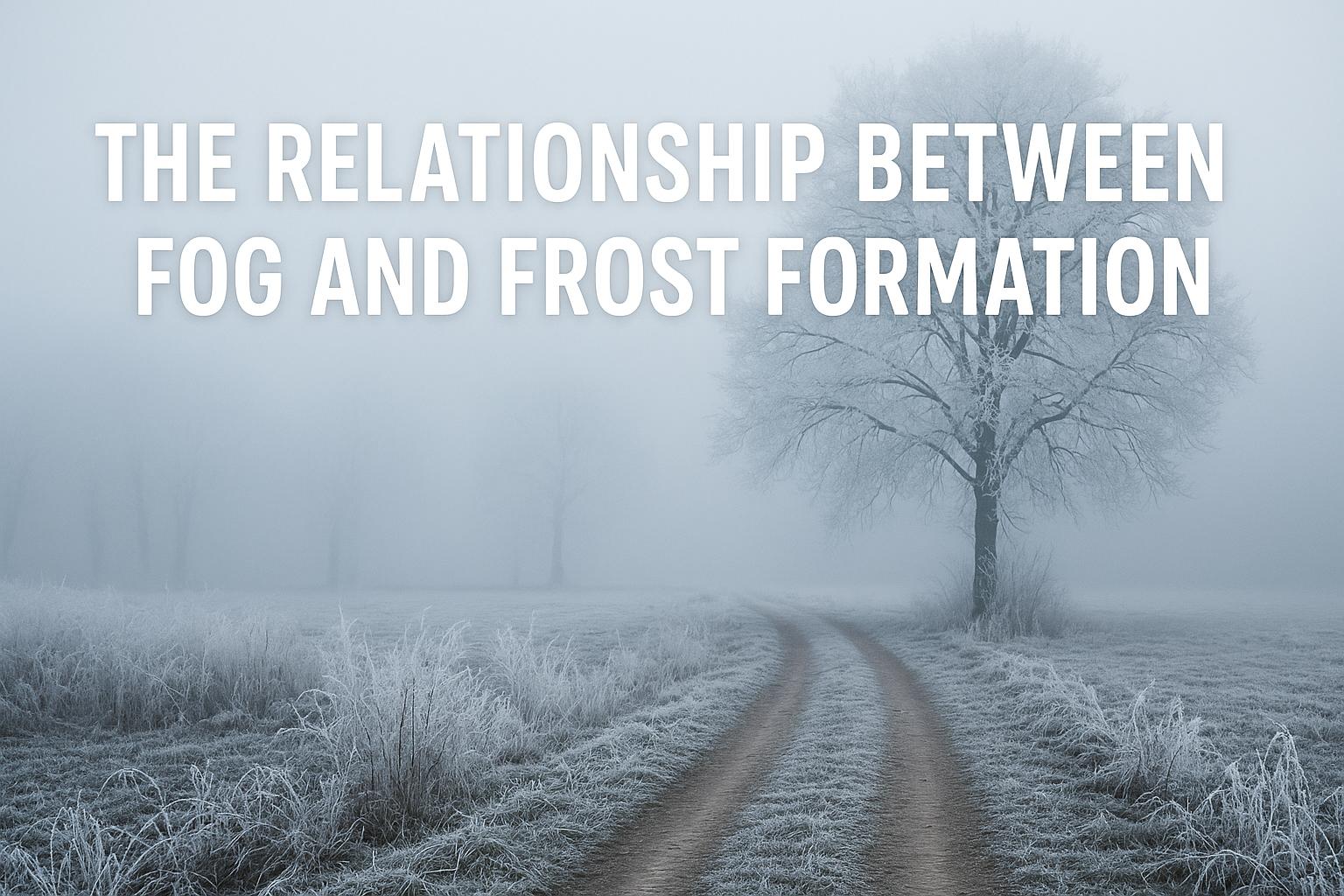
The relationship between fog and frost can be both direct and indirect. During certain conditions, fog may precede frost formation. As fog reduces radiant heat loss from the ground, once it dissipates and skies clear, rapid cooling can lead to frost development. Conversely, when frost forms initially, it often results in conditions that can facilitate fog formation upon sunrise as temperatures slightly rise, increasing humidity.
This interplay is significant as it demonstrates the dynamic nature of atmospheric conditions and their ability to transform fluidly, reflecting broader patterns of weather systems. While fog and frost can form in isolation, their occurrence may also be part of a series of atmospheric events that lead to various weather conditions, each influencing human activity in multidimensional ways.
Environmental Implications
The formation of fog and frost has considerable implications on various sectors, including agriculture and transportation. Pilots and drivers must navigate reduced visibility when fog occurs, which can lead to delays and increased risk of accidents.
In agriculture, frost represents a potential danger to crops, particularly during unseasonal frosts where plants are not acclimated to cold temperatures. Farmers utilize predictive meteorological data to prepare for such events, employing techniques such as frost blankets or sprinkler systems to mitigate frost damage.
These implications underscore the necessity for accurate weather predictions and informed preparedness strategies across multiple sectors to minimize the adverse impacts associated with these atmospheric phenomena.
Scientific Exploration and the Future
Progress in the understanding and prediction of fog and frost continues to be a focal point in meteorological studies. Enhanced satellite technology enables more precise monitoring of atmospheric conditions, aiding in the development of sophisticated models that can predict these occurrences with greater accuracy.
As climate change impacts global weather patterns, the frequency, and characteristics of fog and frost events are anticipated to alter, necessitating ongoing research. An understanding of how rising temperatures and changes in atmospheric composition influence these phenomena will be critical in adapting strategies for dealing with their impacts.
Further Reading
For more detailed information on these atmospheric processes, consider exploring meteorological resources such as the UK Met Office or the National Oceanic and Atmospheric Administration (NOAA), which offer extensive insights into weather phenomena.