How Wind Affects Fog Movement and Dissipation
The Role of Wind in Fog Dynamics
Fog, an atmospheric phenomenon that manifests as a thick cloud hovering close to the ground, presents unique challenges across various fields, significantly influencing visibility conditions. This intricateness of fog invites a careful examination of how wind impacts its development, movement, and eventual dissipation. For meteorologists, aviators, and motorists, understanding these dynamics is not only academically intriguing but practically essential. It is through this detailed understanding that measures can be devised to predict and mitigate the effects of fog, thus enhancing safety and efficiency in activities affected by this enigmatic weather condition.
Wind Speed Influence
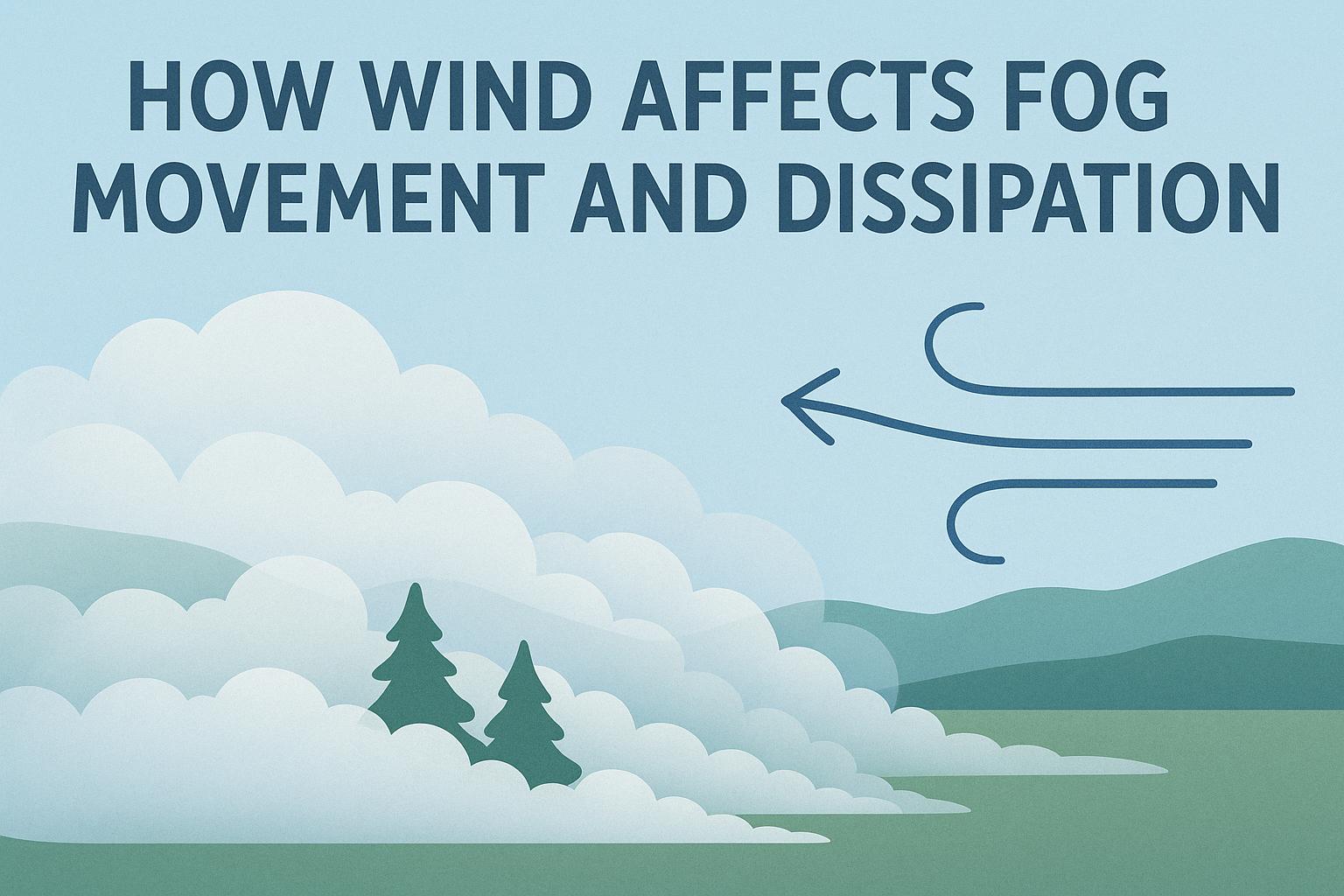
Among the myriad factors influencing fog, wind speed holds a pivotal position. Light to moderate winds enable the dispersion of fog by facilitating the mixture of air layers. This mixing introduces drier air into the fog-laden zone, effectively reducing the moisture content that supports its persistence. In these conditions, mist tends to lift and thin, gradually restoring clarity to the surroundings. Yet, this process is highly sensitive to the wind’s force; should the wind intensify beyond moderate levels, the result can be a failure in achieving sufficient vertical mixing, paradoxically allowing fog to cling to the landscape or shift to new locations.
Conversely, the absence of wind, characterized by calm conditions, allows fog to remain grounded and dense. Without the dynamic air exchanges facilitated by wind, the fog retains its moisture, sustaining its presence over time. Under these circumstances, the fog’s persistence disrupts visibility, leading to potential hazards, particularly in sectors reliant on visual acuity such as aviation, shipping, and road traffic.
Direction and Fog Movement
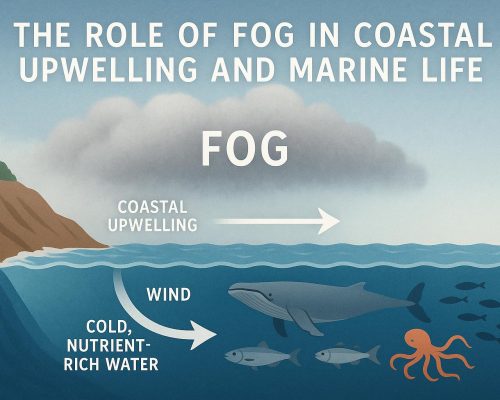
Equally critical to understanding fog dynamics is the role of wind direction. The origins of the wind decisively dictate where fog migrates. When winds traverse over bodies of water, they possess the ability to absorb additional moisture, contributing to fog formation or perpetuation over adjacent land areas. This process underscores the intricacy of predicting fog behavior in regions where land meets large water bodies.
In contrast, offshore winds exhibit the propensity to drive fog seaward, resulting in coastal clearance. This movement is advantageous for coastal locales, as it reduces the fog’s impact. It also exemplifies the necessity for precise wind direction forecasts, enabling timely advisories. Such predictions equip communities and industries with the critical information needed to prepare for shifts in fog coverage.
Interactions with Terrain
A further layer of complexity emerges when considering the interaction between wind and the earth’s terrain. Topography exerts a formidable influence over wind patterns and, subsequently, fog behavior. In mountainous and valley-rich regions, terrain-driven wind channels can lead to phenomena such as fog entrapment within valleys or directional shunting along mountain ridges. These localized weather conditions challenge forecasters who strive to anticipate fog patterns in such varied geographical settings.
Advanced meteorological models incorporating topographical data are essential for honing fog predictions. These models not only assist in crafting accurate forecasts but also facilitate tailored advisories for regions with complex physical landscapes. Thus, topography’s role in shaping wind-induced fog dynamics exemplifies a meticulous interplay between natural features and atmospheric conditions.
Impact on Human Activities
The interaction between wind and fog has profound implications for human activities, driving the need for robust understanding and predictive capabilities in this domain. Airports, as hubs of air travel activity, depend on meticulous fog forecasts to efficiently manage air traffic. Given that fog severely inhibits visibility, particularly during takeoffs and landings, accurate predictions are paramount for ensuring the safety of air operations.
Similarly, the maritime sector is intensely impacted by fog dynamics. Ports and shipping routes benefit from an in-depth understanding of wind-fog interactions, which aids in securing safe navigation amid reduced visibility conditions. Accurate forecasts facilitate the strategic planning of maneuvers, docking procedures, and overall vessel safety.
In the realm of road transportation, timely and precise fog forecasts mitigate risks associated with diminished visibility. Motorists rely on such forecasts to make informed decisions, enhancing roadway safety by preventing collisions and accidents on fog-prone routes.
In conclusion, the intricate relationship between wind and fog represents a multifaceted interplay of atmospheric variables and physical geography. Harnessing this understanding through scientific advancements enables the development of predictive models crucial for mitigating the impacts of fog across various sectors. By leveraging advances in technology and data analytics, scientists and meteorologists continuously refine their capacity to predict fog behavior, thus contributing to enhanced safety and operational efficiency in weather-dependent activities. These efforts underscore the pivotal role of wind in influencing the behavior of this enigmatic weather phenomenon.