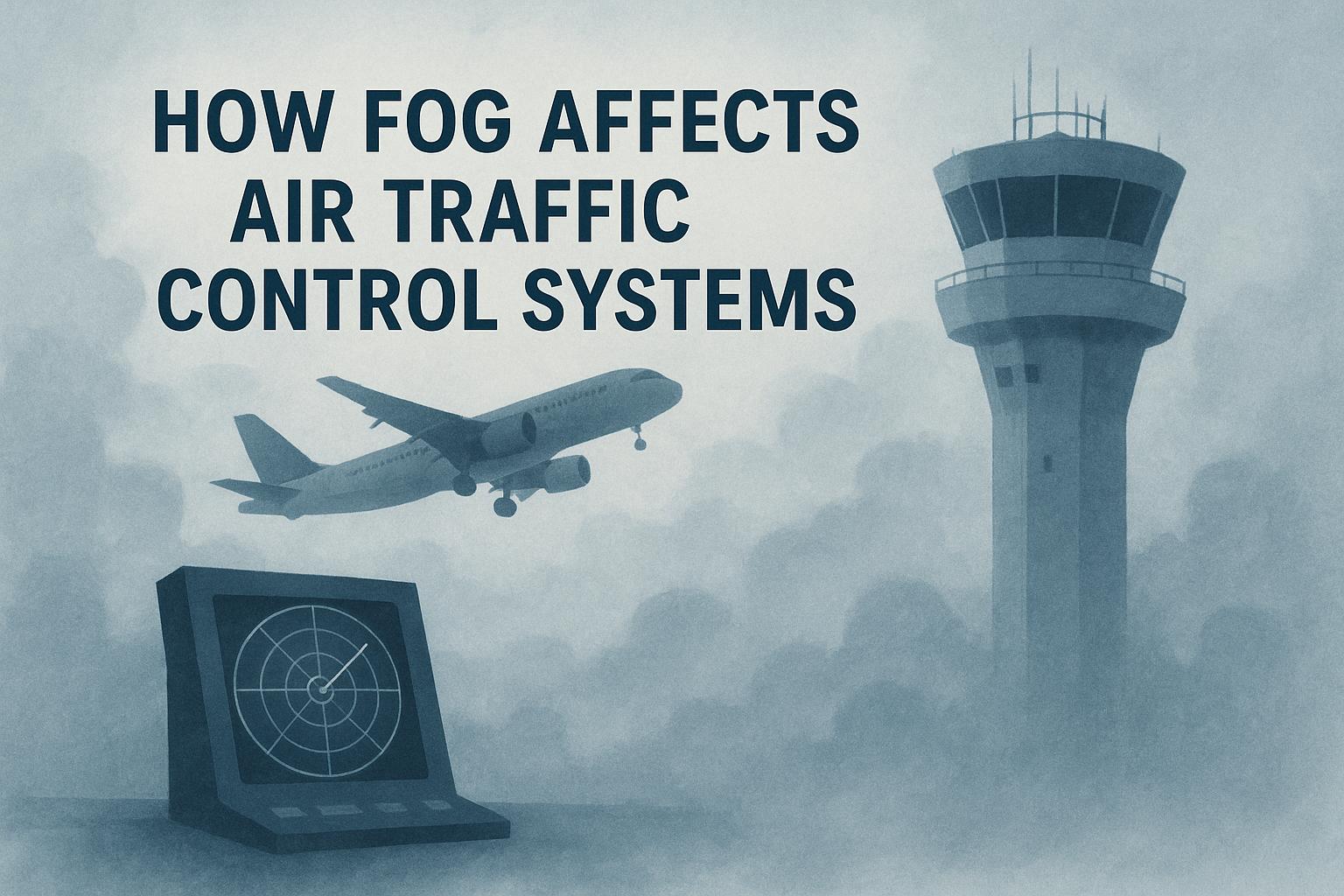
How Fog Affects Air Traffic Control Systems
Introduction
Fog is a prevalent weather phenomenon that imposes significant challenges on air traffic control (ATC) systems worldwide. The reduced visibility caused by fog complicates the responsibilities of both pilots and air traffic controllers, demanding meticulous coordination to ensure safety and operational efficiency. Understanding how fog affects ATC operations is vital for maintaining the safety and efficiency of air travel.
Visual Flight Rules vs Instrument Flight Rules
Under standard weather conditions, pilots primarily utilize Visual Flight Rules (VFR), allowing them to navigate their aircraft by relying on visual cues from the environment. This method is effective when skies are clear and visibility is unimpaired. However, the presence of fog transforms the situation dramatically. With visibility severely restricted, pilots must shift to Instrument Flight Rules (IFR), which entails navigating primarily through cockpit instruments and relying heavily on guidance from air traffic control.
This shift to IFR due to fog-related conditions significantly impacts the operations of both pilots and air traffic controllers. Pilots must be adept at interpreting instrument data and responding to control instructions promptly. Meanwhile, air traffic controllers are tasked with providing precise navigation instructions and updates on weather conditions and procedural changes to facilitate safe flight operations. The coordination required under IFR conditions underscores the importance of advanced training and the use of technology to maintain safety and operational efficiency.
Impact on Runway Operations
One of the most pronounced impacts of fog is on runway operations at airports. With reduced visibility, the complexity of managing safe landings and take-offs increases. Airports often implement specialized navigation systems such as the Instrument Landing System (ILS) to compensate for the limited visibility. The ILS plays a crucial role in guiding pilots onto the runway by providing lateral and vertical guidance even when visual contact with the runway is obstructed by fog.
In addition to employing ILS, longer intervals between successive landings and take-offs become necessary in foggy conditions. This increased separation ensures enough time for aircraft to clear the runway before the next one lands or takes off, albeit reducing airport capacity. Consequently, the rate at which airports can handle incoming and outgoing flights is curtailed, often leading to delays. Managing these intervals efficiently is crucial for airport operations, as it helps in balancing safety with airport capacity.
Role of Technology in Mitigating Fog Effects
To mitigate the adverse effects of fog on air traffic control systems, advanced technologies are deployed extensively. Automated systems like ground radar enhance situational awareness by providing controllers with real-time data about aircraft positions, even when visibility is low. This technology is instrumental in guiding aircraft during taxiing, take-offs, and landings in foggy conditions.
Ground-based lighting systems are also integral to maintaining operations under reduced visibility. High-intensity runway lights delineate the path for aircraft, ensuring safe maneuvering during takeoffs and landings. Additionally, runway visibility sensors are employed to continuously monitor visibility conditions and relay this information to control personnel and pilots, aiding in their decision-making process. Together, these technological solutions ensure that essential operations can continue safely and effectively under the constraints imposed by fog.
Communication and Coordination
Effective communication and coordination become even more critical in foggy conditions. Air traffic controllers must provide clear and frequent communication to pilots to ensure safe aircraft movements. This demands a high level of coordination between various entities involved in air traffic operations.
Controllers must coordinate between ground services and air navigation services to relay timely updates and instructions. Continuous updates to pilots regarding weather conditions, changes in procedures, and any potential hazards or disruptions are essential. This heightened level of interaction and coordination underscores the importance of robust communication systems and protocols in air traffic management.
Impact on Delays and Scheduling
Fog-induced visibility constraints often lead to significant delays in flight schedules. The increased spacing required between aircraft for safe landings and takeoffs causes a bottleneck, slowing down airport operations. Air traffic control must tactically manage these delays to minimize disruption, sometimes involving rerouting and rescheduling flights to accommodate the weather conditions.
The flexibility of air traffic management systems is crucial in adapting to these challenges. Anticipating weather changes, implementing contingency plans, and communicating effectively with airlines and passengers are pivotal. This adaptability helps minimize the impact of fog on flight schedules while maintaining safety as the top priority.
Conclusion
Fog presents a unique challenge to air traffic control systems, significantly impacting visibility and necessitating a reliance on advanced technological systems and procedures. Although considerable efforts are made to mitigate the effects of fog, the adaptability and preparedness of both air traffic systems and personnel remain essential for ensuring safety and optimizing operations during foggy conditions. As such, continuous improvements in technology and procedure are crucial for fostering an efficient and responsive air traffic control infrastructure. For further information on related topics, you can explore this resource.