How Animals Adapt to Foggy Environments
Introduction to Foggy Environments
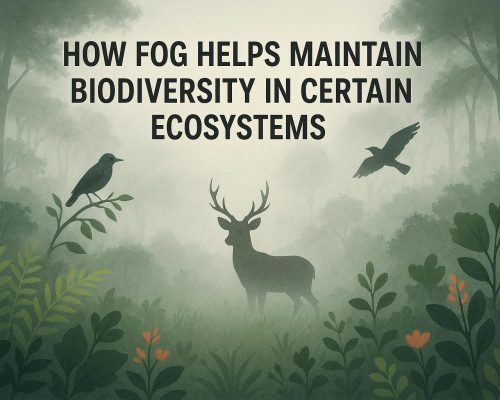
Foggy environments present unique challenges and opportunities for animal life. These conditions can be found in regions such as coastal areas, high mountains, and islands, where fog is a regular occurrence. Animals inhabiting these regions have evolved remarkable adaptations to survive and thrive despite reduced visibility and altered ecosystems.
Understanding Fog and Its Impact
Fog is essentially a cloud that forms at ground level, consisting of tiny water droplets suspended in the air. This can lead to reduced visibility and cooler temperatures. For animals, these conditions can impact foraging, navigation, and communication. Understanding how animals adapt not only underscores the resilience of wildlife but also provides insights into the functioning of these unique ecosystems.
Fog imposes various atmospheric and environmental changes leading to unique ecological niches and adaptations. Reduced light levels, altered temperature fluctuations, and increased humidity levels characterize foggy environments. The presence of fog can drastically reduce visibility, impacting how animals move, find food, and interact with each other. These conditions dictate how species evolve to either mitigate these challenges or exploit the opportunities fog presents.
Sensory Adaptations
Sensory adaptations are crucial for animals residing in fog-heavy regions. Many species have developed heightened senses to compensate for limited sight. For instance, some animals rely on their acute sense of smell or enhanced hearing abilities to detect predators or find food. Moles and other burrowing animals depend on vibration detection to navigate their surroundings, an adaptation that serves them well in obscured environments.
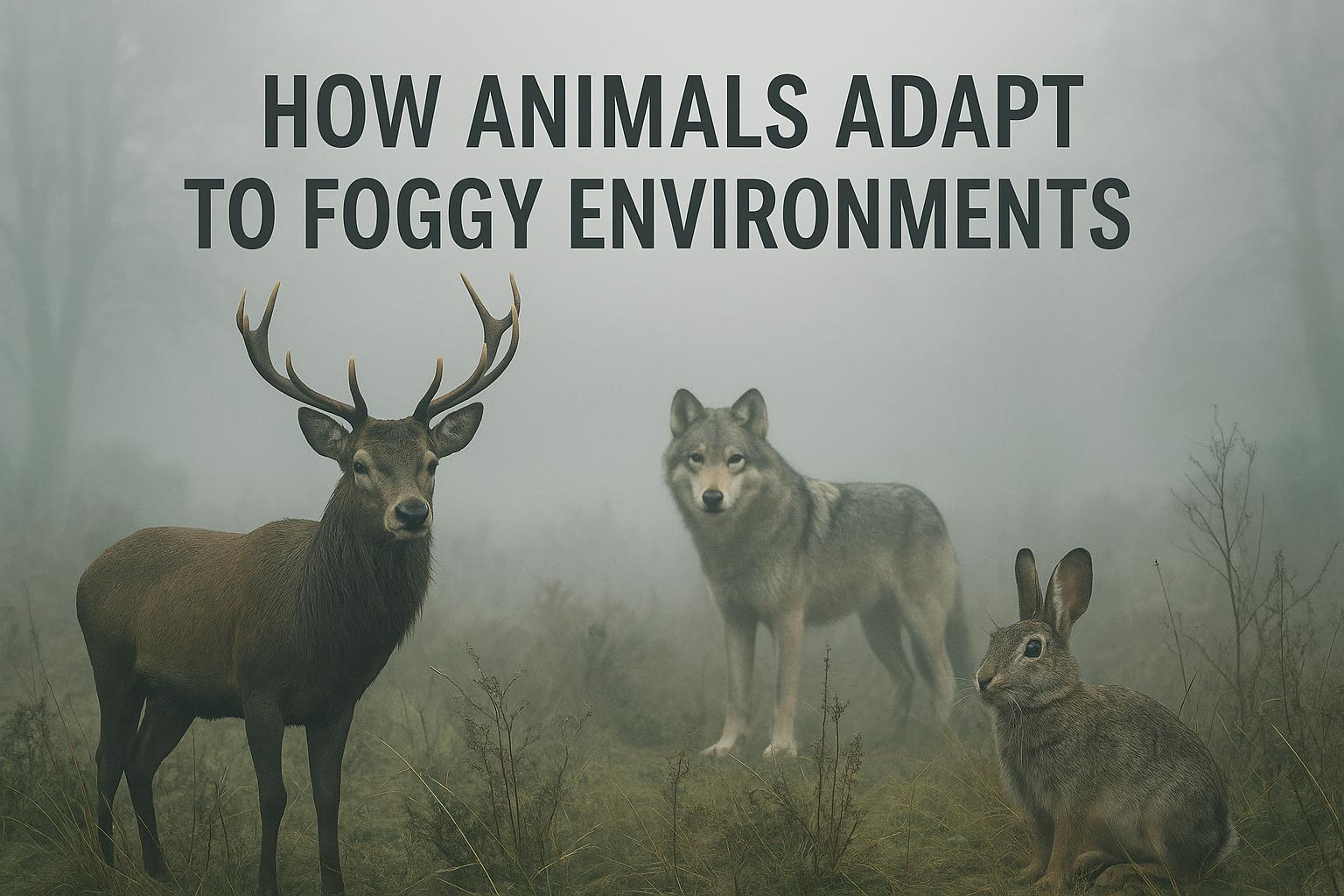
The evolution of sensory adaptations among animals living in fog-laden environments is fascinating. For example, mammals like deer have an acute sense of hearing, enabling them to detect predators despite the visual limitations imposed by fog. Similarly, some bird species have specialized auditory abilities to communicate over greater distances when vision is impaired. Additionally, increased reliance on olfactory cues allows these animals to locate food sources or mates in a predominantly white landscape.
Camouflage and Mimicry
Fog offers a different kind of camouflage for prey animals, but they must still avoid predators. Species such as mountain goats and certain coastal birds have developed coloration that helps them blend into foggy surroundings. This natural camouflage aids in avoiding predators. In some cases, animals engage in mimicry, taking on appearances or scents that help them avoid detection.
Coloration and body patterns specifically adapted to blend with hazy surroundings assist in avoiding predators and increasing foraging success. Foggy conditions blur conventional markings, rendering animals with certain adaptive coloration nearly invisible against a diffuse background. Some species have evolved smells that mimic the environment or non-prey species, an effective evolutionary strategy for invisibility in dim, cloud-kissed terrains.
Behavioral Modifications
Behavioral changes are another way animals adapt to foggy conditions. For example, some species alter their activity patterns, becoming more active during times when fog is less dense. This can help in both predator avoidance and foraging efficiency. Birds, such as the albatross, may use unique flight patterns to navigate through fog and return to their nesting sites.
Alteration in behavior is often dictated by the persistent presence of fog. Many nocturnal animals or species active at dawn and dusk have synchronized their activity patterns to periods where visual conditions, albeit still hindered, allow for safer movement or more efficient resource gathering. These adaptations sometimes involve intricately learned skills, such as the use of specific landmarks or acoustic signals to maintain group cohesion.
Case Study: The Silver Ant of the Namib Desert
In a unique example, the Namib Desert’s silver ants, while not traditionally associated with foggy environments, provide an interesting look at fog adaptation. These ants collect moisture from fog, which is a vital survival strategy in their arid habitat. This behavior highlights the versatile adaptations animals can develop to utilize fog, even in unexpected regions.
The silver ants have evolved to use their unique hairs to collect minute water droplets from fog, ensuring their hydration and survival. This adaptation indicates a fascinating crossover where environmental conditions have led to the development of special physiological adaptations. The significance of this lies in exemplifying how even arid zone entities benefit from fog, blurring lines between distinct ecological needs and adaptations.
Ecological Implications
The adaptation of animals to foggy environments has significant ecological implications. These adaptations influence species interactions, predator-prey dynamics, and even the distribution of organisms. Understanding these factors can offer insights not only into individual species’ biology but also into broader ecological patterns and processes.
These adaptations may lead to evolved niche specialization, where species interactions form a complex web of dependency and communication. In particular, predatory dynamics are altered as both predator and prey develop strategies around environmental factors governed by fog. This underscores a delicate balance where ecological transformations can have cascading impacts on biodiversity, species dispersal, and ecosystem stability.
Conclusion
Animals living in foggy environments exhibit a remarkable range of adaptations, demonstrating nature’s ingenuity in overcoming challenges. From sensory enhancements to behavioral changes, these adaptations ensure survival and continuity in the face of persistent environmental conditions. For further exploration of animal adaptations to challenging environments, consider visiting trusted resources and databases on wildlife and ecology studies.
Overall, the study of fog and its effects on animal life expands our understanding of how life persists in varied environments around the globe. It highlights the intricacies of evolutionary adjustments and invites a deeper appreciation for the relentless adaptability of life. As ecosystems continue to change, largely influenced by climatic variations, examining these adaptations can provide predictive insights into future biodiversity and conservation tactics. The interconnectedness and complexity of life under the ambiguity of fog remind us of the continuity and resilience embedded within natural systems.