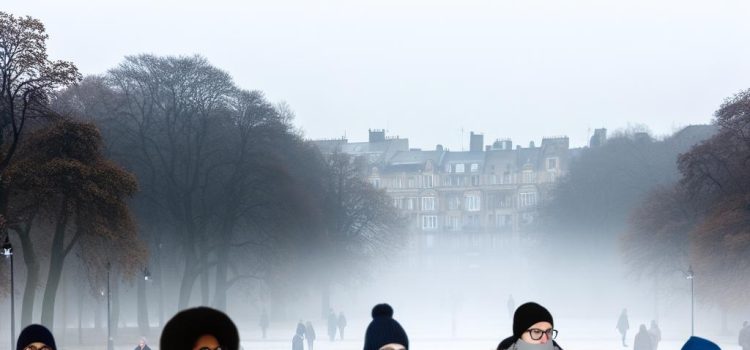
The Role of Fog in Literature and Poetry
Fog has long fascinated writers and poets, serving as a versatile symbol and motif throughout literary history. Its ephemeral nature and obscuring properties make it an ideal metaphor for uncertainty, mystery, and transformation. This article delves into how fog has been used in literature and poetry, highlighting its thematic significance and enduring appeal.
Fog: A Symbol of Mystery and Ambiguity
Writers often employ fog to create an atmosphere of mystery and ambiguity. In Charles Dickens’ Bleak House, fog envelops the city of London, serving to highlight the murky and convoluted legal system at the heart of the novel. The pervasive fog mirrors the uncertainty faced by the characters, wrapping scenes in a veil of ambiguity and reflecting the confusion and obscurity of their predicaments.
Similarly, in Arthur Conan Doyle’s Sherlock Holmes stories, fog frequently shrouds the London streets, enhancing the enigmatic and suspenseful plots. The fog here functions metaphorically, representing the unknown and aiding in the cultivation of intrigue as Holmes navigates through concealed truths and hidden agendas.
Enhancing Narrative Depth with Fog
The ability of fog to obscure and reveal selectively is utilized by writers to add layers to their narratives. In literary contexts, where the unknown drives the plot, fog serves as a perfect tool to build suspense. By concealing critical details and characters’ intentions, it leaves readers eager to uncover hidden truths. This storytelling device not only enhances plot complexities but also evokes a visceral reaction from audiences, drawing them deeper into the narrative.
Case Study: Dickens and Doyle
In the works of Charles Dickens and Arthur Conan Doyle, fog operates on multiple levels. In Bleak House, Dickens doesn’t just use fog as a physical phenomenon but as a thematic extension of his critique of society and its institutions. The legal world, opaque and inaccessible, reflects itself through the impenetrable London fog. Meanwhile, Conan Doyle uses fog more directly within the detective genre. In stories like “The Hound of the Baskervilles,” fog is employed not only to evoke a mood of suspense but also to physically block Holmes’ and the reader’s ability to deduce solutions immediately, thereby prolonging the tension.
Fog as a Metaphor for Mental States
Fog is also employed as a metaphor for the characters’ internal experiences or mental states. Virginia Woolf, in her novel Mrs. Dalloway, uses fog to reflect the internal confusion and emotional turmoil of her characters. The fluctuating, nebulous nature of fog echoes the characters’ psychological landscapes, adding a layer of introspection and depth to the narrative.
In poetry, T.S. Eliot’s famous line from “The Love Song of J. Alfred Prufrock” describes the fog as a cat, which not only enhances the sensory imagery but also mirrors the speaker’s indecisiveness and passivity. Here, fog serves to express the character’s sense of disorientation and alienation, subtly enhancing the poem’s emotional undercurrents.
Exploring Internal Landscapes
By equating fog with psychological states, writers offer insights into the mind’s complexity. The fog serves as a thematic mirror reflecting internal chaos, indecision, and fragmentation. Notably, fog’s shift from physical to metaphorical is seamless, making it apt for illustrating transitional states of mind. When a character navigates through fog, they symbolically confront their internal struggles, representing the journey towards self-awareness or acceptance.
Visual Imagery and Emotion
The use of fog in poetry and prose often serves to generate rich imagery and evoke emotion. Eliot’s depiction in “The Love Song of J. Alfred Prufrock” transforms the fog into a living entity, creeping and inhabiting the world just as doubt and hesitation inhabit the human mind. This dualism between the external world and internal psyche forms a compelling narrative where the fog blurs boundaries and prompts readers to delve deeper into the personal realms presented.
Fog in the Gothic and Romantic Traditions
The use of fog in Gothic literature often enhances the atmosphere of dread and suspense. For instance, in Bram Stoker’s Dracula, fog accompanies the Count and intensifies the sense of impending danger, adding layers of gothic foreboding to the narrative. The obscuring fog is not just a backdrop but an active participant in the novel’s eerie ambiance.
During the Romantic period, poets like William Wordsworth and Samuel Taylor Coleridge explored natural elements, with fog often symbolizing the sublime and the transcendental aspects of nature. In Wordsworth’s work, fog underscores the beauty and mystery of the natural world, inviting contemplation and reflection.
Gothic Foreboding and Romantic Sublimity
In the Gothic tradition, fog is as much a character as the protagonists struggling against unseen forces. Its presence amplifies the terror, shrouding characters in a cloak of the unknown, while simultaneously propelling plots by serving as both hiding space and reveal mechanism.
Conversely, Romantic poets viewed fog through a different lens. For them, it wasn’t merely a tool to build fear but rather a gateway to transcendental experiences. The fog offered a bridge between the known and unknown, drawing attention to the limitless potential of the human spirit and the expansive vistas beyond immediate perception.
Active Participation of Fog in Gothic Atmospherics
In Dracula, Stoker uses fog to portend danger and doom, creating settings where safety seems elusive and menace is omnipresent. As a manifestation of the supernatural, fog becomes a harbinger of Count Dracula’s presence, making the unseen all the more terrifying. The eerie, all-enveloping fog resembles the human fear of the dark, making Gothic literature compellingly unsettling.
Nature as a Canvas for Human Emotion
For Romantic poets, fog was integral to expressing the sublime. Wordsworth and Coleridge, pioneers of Romanticism, utilized fog not as an element of fear but as a conduit to the majestic and awe-inspiring realms of nature. By veiling landscapes, fog heightened the mystery of the natural world, leading observers to ponder what lay beneath its surface and, by extension, what lay within themselves.
Conclusion
From Victorian novels to modernist poetry, fog has maintained its presence as a powerful literary device. Its ability to transform landscapes and conceal truths makes it a recurring symbol of mystery, uncertainty, and emotional complexity. Whether obscuring paths, enveloping characters, or shrouding secrets, fog continues to captivate the imagination, maintaining its significance in literature and poetry across the ages. Its enduring allure lies in its dual capacity to mirror external and internal worlds, a versatile tool for writers to explore the depths of human experience.