How Air Quality is Affected by Fog
Understanding the Relationship Between Air Quality and Fog
The intricate relationship between fog and air quality involves a multitude of atmospheric interactions. Although fog is essentially a collection of tiny water droplets hanging in the air, its occurrence can have far-reaching effects on air quality. To understand this complex relationship, we need to explore various aspects of both fog formation and the dynamics of air pollution.
What is Fog?
Fog is a type of visible aerosol, primarily made up of minute water droplets or ice crystals, that appears at or near the Earth’s surface. Essentially, it is a cloud that has descended to ground level. Fog generally forms when moist air undergoes rapid cooling, which causes water vapor in the air to condense into tiny liquid droplets. These droplets are small and sparse enough to stay suspended in the atmosphere, yet dense enough to create an opaque or fuzzy appearance. This fascinating natural phenomenon adds to the scenic beauty of landscapes but has significant environmental implications.
Types of Fog
Fog is not a one-size-fits-all phenomenon; it manifests in various forms depending on the atmospheric conditions that prevail during its formation. The most common types of fog include radiation fog, advection fog, valley fog, and freezing fog. Each type results from specific environmental conditions and exhibits unique characteristics.
1. **Radiation Fog** occurs typically at night when the ground loses heat through radiation, cooling the air close to the surface. The temperature drop causes water vapor to condense, forming fog. This is common in calm weather conditions.
2. **Advection Fog** forms when warm, moist air passes over a cooler surface, which cools the air to its dew point, resulting in the formation of fog. This is often observed along coastlines where sea breezes blow moist air over colder land.
3. **Valley Fog** finds its place in basins and valleys where cool air is trapped due to topographical obstacles, leading to the condensation of water vapor.
4. **Freezing Fog** occurs when the droplets in the fog freeze upon contact with surfaces, forming ice crystals. This type can be particularly hazardous as it creates slippery surfaces.
Impacts of Fog on Air Quality
Fog has several implications for air quality, which can have repercussions for both environmental health and human safety. The presence of fog can lead to diverse interactions with atmospheric pollutants, influencing their behavior and impact.
Dispersion of Pollutants
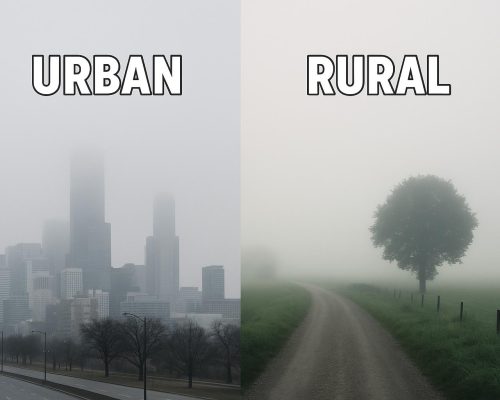
During foggy conditions, pollutants have a tendency to become trapped near the Earth’s surface. The water droplets in fog effectively serve as a boundary or ceiling, restricting the upward movement of air. This lack of vertical dispersion means that pollutants such as nitrogen oxides, sulfates, and particulate matter can concentrate to levels higher than normal. Increased pollutant concentrations may lead to degraded air quality, posing risks to human health, especially for those in urban areas. Areas under foggy conditions may experience deteriorated air quality, leading to advisories and necessary precautions for sensitive groups like children and those with pre-existing health conditions.
Chemical Reactions
Fog does not just act as a physical mechanism for trapping pollutants; it also serves as a fertile ground for chemical reactions. The water droplets within the fog can act as micro-reactors where pollutants undergo transformations into more hazardous compounds. For example, sulfur dioxide present in the atmosphere can oxidize to form sulfates in the presence of fog, contributing to what is known as acid fog. Acid fog can be substantially more harmful when inhaled than regular fog, exacerbating conditions like asthma and other respiratory diseases. These chemical changes emphasize the need for comprehensive monitoring and management of air quality during foggy periods.
Reduced Visibility and Safety Concerns
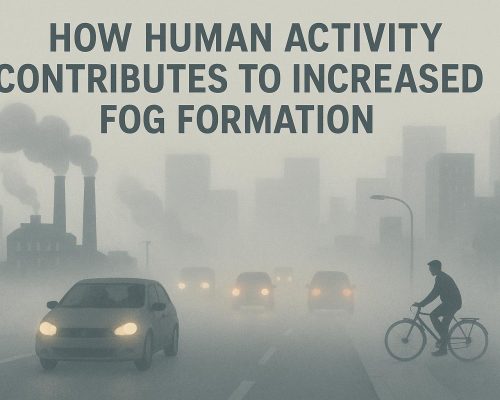
Fog is notorious for reducing visibility, often causing significant safety challenges. This reduced visibility can increase the likelihood of accidents on roads, resulting in traffic congestion. Traffic slowdowns contribute to increased emissions from vehicles, thereby further worsening air quality. In this way, fog indirectly leads to elevated levels of exhaust pollutants. Efficient management of road conditions and public awareness during fog events are crucial to mitigate these safety concerns and their environmental consequences.
Monitoring Air Quality During Foggy Conditions
The real-time monitoring of air quality during fog events takes on critical importance given the interactions discussed earlier. Fog layers can present significant risks to health, particularly for individuals with pre-existing respiratory conditions. The air quality index (AQI) becomes a vital tool, providing current data on pollution levels and delivering guidance on preventive measures. Regulatory bodies and environmental agencies often issue advisories based on AQI data to inform the public about protective actions.
Technological Advances
Technological innovations have brought about significant improvements in air quality monitoring during fog. Modern equipment and methods provide more accurate data and better forecasts about pollution levels. Sensors now capable of detecting a wide range of pollutants with high precision facilitate more comprehensive environmental monitoring. These advances contribute to more effective management strategies and public health responses. Greater analytical capabilities provide valuable insights for emergency response teams and policymakers.
Conclusion
Although fog is a natural phenomena, its interactions with pollutants present distinct challenges to environmental management and public health policy. Understanding the dynamic relationships between fog and air quality is essential to tackle these challenges. By expanding our knowledge and constantly updating our methodologies, society can develop strategies to alleviate the detrimental impacts of fog on air quality. Staying informed through research updates and studies from atmospheric science publications and environmental agencies remains vital for individuals and communities aiming for improved air quality management and public health.