The Impact of Fog on Military Operations
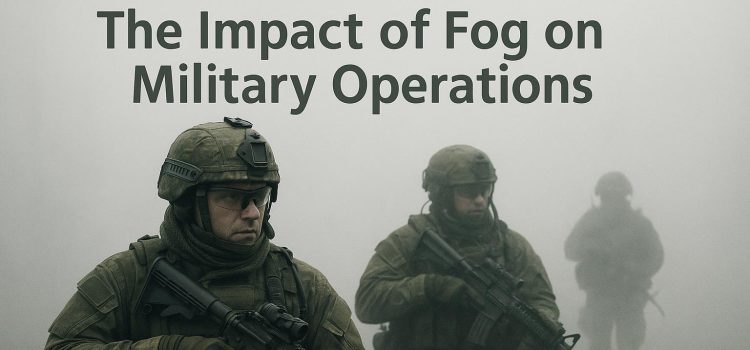
Fog significantly affects military operations by influencing visibility, communication, navigation, and the safety of personnel. Its unpredictable nature makes it a critical factor that military strategists must consider when planning both offensive and defensive maneuvers. This article explores the multifaceted impact of fog on military operations, providing insights into its challenges and implications.
Impaired Visibility
One of the primary challenges that fog poses in military contexts is impaired visibility. Reduced visibility hampers the ability of military units to observe enemy positions and gauge battlefield dynamics. In conditions of dense fog, visibility can be limited to just a few meters, significantly increasing the risk of engagement with hostile forces and the likelihood of misidentifying enemy assets.
Beyond the immediate visual challenges, impaired visibility due to fog can also affect the precise coordination necessary for complex military maneuvers. Military operations often rely on accurate timing and synchronization between units, and difficulties in visual assessment increase the risk of mistimed actions. Furthermore, fog can disrupt the ability of units to properly assess the terrain, leading to potential miscalculations in strategic positioning.
Navigational Challenges
Fog complicates navigation for both ground and aerial military units. For ground troops, orienting themselves on the battlefield becomes considerably more challenging, potentially leading to disorientation and delays in reaching targeted locations. The presence of fog necessitates reliance on maps, compasses, and digital navigation tools, but even these aids can suffer under certain conditions, particularly if electronic systems experience malfunction.
For aircraft, fog increases the risks related to flight operations, including takeoffs, landings, and mid-air maneuvers. Pilots must depend more heavily on instruments rather than visual cues, which demands high levels of skill and experience. This reliance on advanced aviation technology underscores the need for ongoing training and development to ensure navigational accuracy and safety in less-than-optimal conditions.
Impact on Communication
Fog also affects communication systems, especially those relying on line-of-sight technologies. The presence of fog can lead to signal degradation for radio and other communications equipment, complicating coordination efforts among dispersed military units. This can hinder the transmission of critical information and orders, potentially impacting the overall efficiency of missions.
Moreover, the atmospheric conditions brought about by fog can create unpredictable anomalies in radio signal properties, sometimes resulting in unexpected interference or diminishing the effective range of communication devices. Such challenges necessitate the adoption of multi-channel communication systems that can operate across various bandwidths, ensuring that units remain linked even in adverse conditions.
Tactical and Strategic Implications
From a tactical standpoint, fog offers both challenges and opportunities. In some scenarios, it can provide a tactical advantage by offering natural concealment. Military units can use the cover of fog to maneuver undetected, launching surprise attacks on unprepared adversaries. This advantage, however, must be carefully balanced against the inherent risks of operating without clear visibility.
Strategically, however, fog demands careful planning and consideration, as it could delay operations or necessitate changes in strategy. Commanders must weigh the benefits of using fog for concealment against the potential for friendly-fire incidents or other complications arising from low visibility. Thus, the presence of fog in operational theaters requires flexible and adaptive approaches to planning and execution.
Countermeasures and Technological Solutions
To mitigate the adverse effects of fog on military operations, forces increasingly rely on technology. The development of advanced radar systems, infrared imaging, and autonomous navigation solutions help to overcome visibility and navigation issues. Radar systems, in particular, allow units to track objects and movements that would otherwise be obscured, while infrared imaging provides critical heat signatures that can identify targets invisible to the naked eye.
Moreover, military communication systems are being engineered to be more resilient against the challenges posed by adverse weather conditions like fog. This includes the use of redundant communication protocols, advanced encryption to guard against potential interception, and the integration of satellite-based systems that provide an additional layer of connectivity independent of ground-based disturbances.
Future Considerations
As military operations continue to evolve, the effects of fog will remain a critical area of study and development. The integration of emerging technologies and enhanced training programs aimed at operating in low-visibility conditions is essential for maintaining operational readiness. These technologies include the continued development of drones and unmanned systems that can conduct surveillance and reconnaissance without requiring human presence in hazardous conditions.
Overcoming the challenges posed by fog will continue to necessitate innovation, adaptation, and strategic foresight from military forces worldwide. Military organizations must invest in research to develop new materials and equipment that perform reliably in fog, such as specialized sensors and optics. Additionally, training programs must incorporate scenario-based drills that simulate fog-covered conditions, ensuring personnel remain effective even when visibility is severely reduced.
In conclusion, while fog presents numerous challenges to military operations, it also offers opportunities that resourceful forces can exploit. By leveraging technology and fostering adaptability, military strategists and personnel can maintain the upper hand in operations despite the complexities introduced by fog. Moving forward, the continued evaluation and integration of innovative solutions will be paramount to ensuring that militaries can navigate, communicate, and operate efficiently in even the densest fog conditions.